 ×


Where your team’s week goes
Five desks in every back office. Start with the one that takes the most time.
Each organisation works on one task. Choose a desk to see what that task could look like.
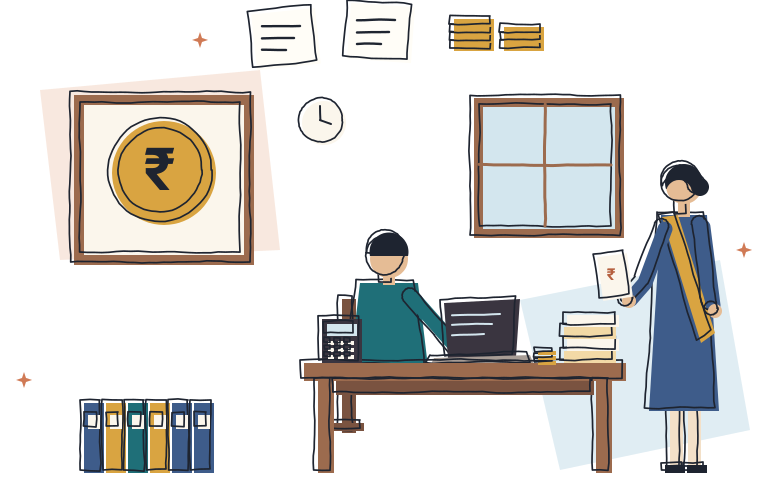
Finance, expenses and procurement
Today
Bills are often stamped, entered in the books, then typed again for each funder’s budget lines.
Tasks we could take up together
- Reading invoices and vouchers, matching them to the ledger and flagging only the ones that don’t match
- Checking expense and travel claims against your policy before they reach an approver
- Comparing vendor quotations side by side for the purchase committee
- Tagging each expense to the right grant and budget line
How it could run
- Bills and vouchers arrive
- AI reads them and matches the ledger
- Only mismatches are flagged
- Finance approves
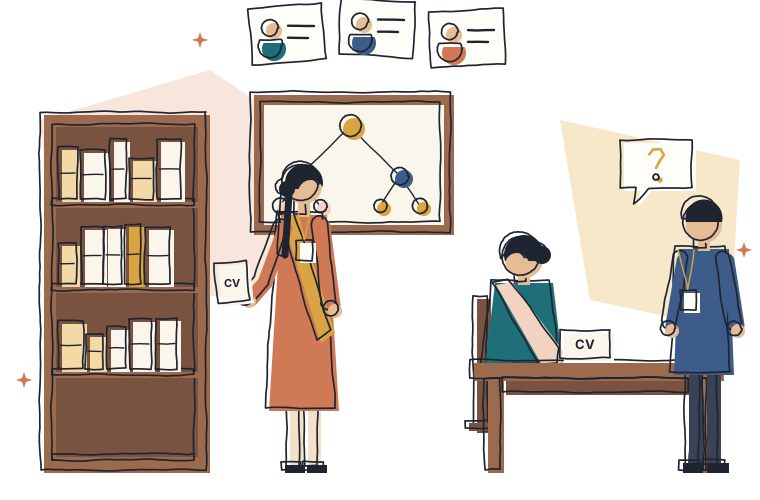
People, HR and organisational knowledge
Today
Finding last year’s leave policy or one staff file can mean asking three people and opening several almirahs.
Tasks we could take up together
- A staff help desk that answers HR questions from your own policies and shows where the answer came from
- Screening job applications against the role’s criteria, with HR making the shortlist
- Preparing joining letters, onboarding checklists and documents for new staff
- Finding past documents in plain words, such as “the 2023 board note on salary revision”
How it could run
- A staff member asks a question
- AI searches your HR policies
- Answer, with where it came from
- HR handles the exceptions
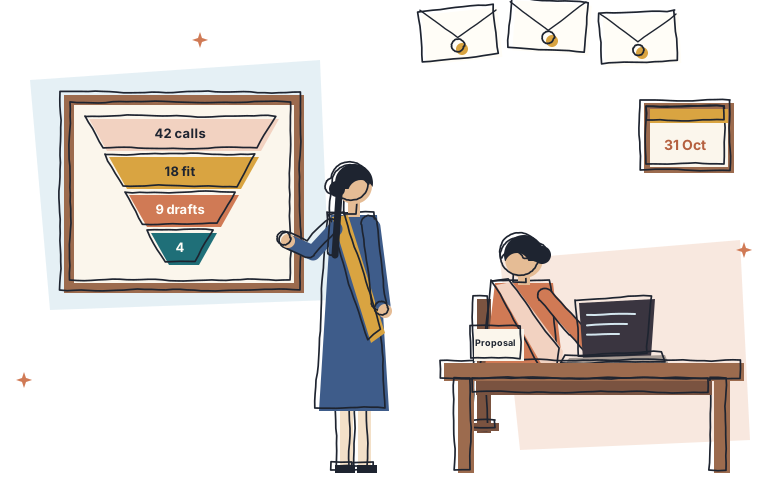
Fundraising, opportunities and proposals
Today
Calls for proposals arrive in several inboxes, deadlines sit with one or two people, and each proposal often starts from a blank page.
Tasks we could take up together
- Scanning RFPs and CSR calls each week and flagging the ones that match your focus areas
- Drafting the first version of a proposal from your past proposals and programme data
- Keeping the donor pipeline current from emails and meeting notes
- Preparing a one-page brief on a donor before a meeting
How it could run
- RFPs and CSR calls come in
- AI screens them against your focus areas
- A shortlist and a first draft
- Your fundraising lead decides
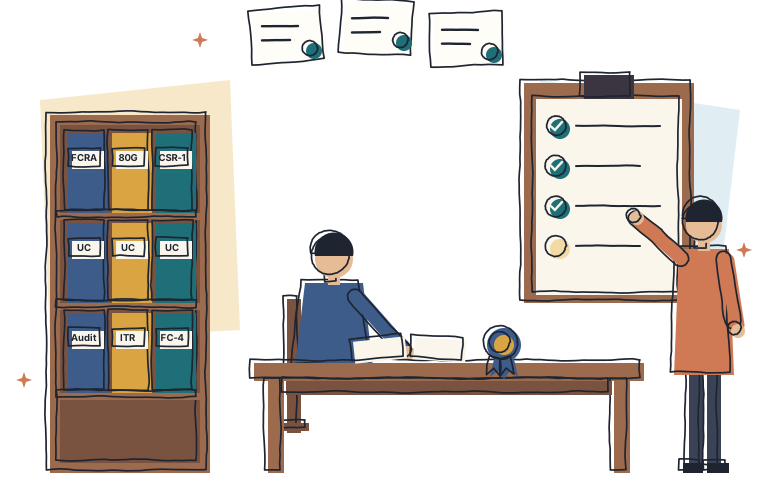
Compliance and donor reporting
Today
The same figures are often gathered by hand for FCRA returns, utilisation certificates and each donor’s own format.
Tasks we could take up together
- Pulling figures from accounts and programme records into each donor’s report format
- Preparing first drafts of utilisation certificates for finance to check
- Tracking FCRA, 80G and CSR-1 deadlines and the documents each one needs
- Checking a report for figures that don’t add up before it goes out
How it could run
- Accounts and programme figures
- AI fills each donor’s format
- Figures that don’t add up are flagged
- Finance signs off
Admin and operations
Today
Asset lists, travel bookings and vendor contracts are followed up over email and kept in folders that only one or two people know well.
Tasks we could take up together
- Checking travel and reimbursement requests and sending them to the right approver
- Keeping the asset register current from purchase records
- Tracking vendor contracts, renewals and expiry dates
- Turning meeting notes into action lists with owners and dates
How it could run
- Requests, assets and contracts
- AI checks policy and due dates
- A queue of what needs action
- Admin approves
These are examples. In the first month, your 10x and Dhwani team would work with you to choose the right task. Sometimes the better answer is a simpler process rather than AI.
How the work runs
AI prepares. Your people decide.
In each of the examples above, the last step sits with a person. AI can help with reading, sorting and matching; approvals and judgement calls remain with your team.
Where AI can help
- Reads documents and pulls out the details
- Sorts, matches and compares
- Finds information across your files
- Drafts a first version and flags exceptions
What stays with your team
- Approve payments, hires and submissions
- Handle the exceptions
- Decide what goes to a donor or regulator
- Own the task once the programme ends
Five months
A decision point at each stage, taken by your leadership.
We would move to the next stage once there is evidence that the previous one worked. Mid-way through Month 2, the whole cohort meets for one working day in Delhi or Bengaluru.
Month 1
Understand
Short AI sessions for your team, and a record of how the task runs today and how long it takes.
End of Month 1
Choose
Pick the one task worth solving and the simplest way to solve it. Your leadership signs off.
DecisionGo ahead, rethink or wait
Months 2 to 4
Build
Set it up and try it on real work, with your team checking what the AI gets right and wrong.
DecisionStart using it, improve it or stop
Months 4 to 5
Use
Make it part of everyday work, with written steps and one person in charge.
Month 5, then 3 months
Keep it going
Compare with how things were before, note the monthly running cost, and we check in for three more months.
DecisionKeep it, grow it or stop
If an idea doesn’t work out, stopping it and writing down why is a valid way to finish. We would rather help you stop early than keep something that doesn’t earn its cost.
At the end
What stays with you after we leave.
One owner
A named person on your team runs it.
Written steps
Who does what, where people check, what happens with exceptions.
Proof
Evidence that it is used and what it changed.
A known cost
The monthly running cost, written down before you decide.
A maintenance path
Who fixes it and how, after we leave.
Three months of check-ins
Light follow-up on use, value and cost.
What your organisation receives
- AI basics and safe, responsible use, for the people who will do the work
- A map of how your task runs today, and how long it takes
- Help choosing the one task worth solving and the lightest way to solve it
- The build, connected to the software you already use
- Support to get your team using it in daily work
- A before-and-after measure and a clear view of monthly running cost
- Peer learning with the other organisations in the cohort, including one day in person
- Templates, checklists and guides your team keeps
Who you work with
One small team, the same people from start to finish.
10x Impact Labs
Process and product lead
Works with your team to shape the task, runs the AI sessions, supports people as they start using it and measures what changed.
Dhwani RIS
Technical lead
Sets up the technology with your team, connects it to the systems you already use, looks after data safety and hands everything over.
Your organisation
Department head and leadership
The department head (for example, the HR director or finance head) owns the task and gives it 4 to 6 hours a week. The CEO, COO, ED or founder joins the three leadership check-in calls.
Supported by Project Tech4Dev. A named lead from each partner runs the cohort together and is your point of escalation.
Key dates
The November cohort
- 23 OctInformation session
- 28 OctLast information session
- 3 NovApplications close
- 4 NovSelected organisations announced
- Mid-NovProgramme begins
Register your interest
It takes about two minutes: a few details about your organisation and the back-office task you have in mind. We reply within one working day. Questions? Write to ai4nonprofit@dhwaniris.com
The form link will be added here shortly.
Questions
Before you apply
What does the programme cost, and how is it paid?
The full programme cost is ₹6 lakh per organisation. Your organisation invests ₹3 lakh, and the remaining ₹3 lakh (50%) is funded by Project Tech4Dev as part of its nonprofit capacity-building grant. Your investment is paid once, in advance, after your organisation is selected. We are not able to take part payments for this cohort.
Who can apply, and how are organisations selected?
Registered nonprofits in India with an annual budget of ₹5 crore or more, a back-office task the team repeats often, a department head who can give it 4 to 6 hours a week, and a CEO, COO, ED or founder who will take part in the go-or-stop decisions. The readiness check above walks through these. After you apply, we would set up a short conversation about your organisation and the task you have in mind, followed by a 15 to 20 minute technical call with the Dhwani team. Selected organisations are announced on 4 November, and a small waitlist is kept.
Who from our organisation should take part?
One person per organisation: the head of the department whose work you want to improve. That would be the HR director for an HR task, or the finance head or director of finance for a finance task, and so on. The CEO, COO, ED or founder joins the three leadership check-in calls. You won’t need an in-house tech or AI team; the Dhwani technical lead takes care of the build, working with the department head.
What is the time commitment for our organisation?
Plan for about five months of active work, then three months of light check-ins. The department head should plan for 4 to 6 hours a week for working sessions, testing and feedback. The CEO, COO, ED or founder joins three short leadership check-in calls: when the task is picked, before it goes into daily use, and when you decide whether to keep it. Most of the work happens online; mid-way through the second month, the cohort meets for one working day in person, in Delhi or Bengaluru depending on where the selected organisations are based.
Which tasks are in scope, and do we need to choose one before applying?
Back-office work: finance, expenses and procurement; people, HR and organisational knowledge; fundraising and proposals; compliance and donor reporting; admin and operations. Programme delivery and field data are outside this cohort. You don’t need to choose before applying; it helps to bring two or three candidate tasks. The final choice is made together in the first month, once we have mapped how the work runs today. The programme covers one main task per organisation; a second can sometimes be looked at if there is time and your team is ready.
Will you build custom software for us?
No. We won’t build separate software. We would start from the systems you already use, such as your accounting software, HR system or MIS, and connect them with a suggested AI tool such as Claude, ChatGPT or NotebookLM, adding a light connecting layer inside that tool. Which tool we use depends on your organisation, including any licences you already have. Everything is documented and handed over, so your team can run it or change support partners later.
Can you help us get software licences at nonprofit rates?
We would be glad to help. Several AI and software providers offer nonprofit pricing, and we can share what we know and help with the application. Approval depends on each provider’s eligibility criteria, so we can’t guarantee it, but we will try to make the process easier for you.
What will we have at the end, and what will it cost to keep running?
One back-office task that now runs with AI, one person on your team in charge of it, proof that it is being used, and a written note of the monthly running cost and maintenance it needs. Your leaders then decide whether to continue over the next 12 months; if they do, your organisation funds those running costs from then on.
What if AI isn’t the right fit for our problem?
Then we would say so early. Sometimes a simpler way of working, or software you already use, is the better answer. Stopping an idea that isn’t working, with the reasons written down, still counts as completing the programme.
Who owns our data, and is it kept safe?
Your data stays yours. We would use only what the task needs, work with samples or remove names wherever we can, follow your own policies and India’s Digital Personal Data Protection Act, 2023, and remove our access at the end. Nothing about your organisation is published without your written permission.